
What Is a Bet Builder? Same-Game Betting Explained
A bet builder combines several outcomes from one match into a single high-odds bet. Learn how bet builders work, correlation, and how to build smarter.
Sports markets. Active offers appear first.
Choose a country to browse its offers.
Most people bet on something to happen — a team to win, a horse to place. But betting exchanges opened up the other side of the coin: the ability to bet on something not happening. This is the lay bet, and it fundamentally changes how you can approach betting. If you have ever wanted to act like the bookmaker rather than the punter, the lay bet is how. Here is how it works.
On a betting exchange, every bet has two sides. To back something is the traditional bet — you are betting it will happen, just like at a normal bookmaker. To lay something is the opposite — you are betting it will not happen. When you lay a team to win, you win your bet if that team draws or loses; you only lose if they win. In effect, laying lets you play the role of the bookmaker, accepting someone else’s back bet.
When you place a lay bet, you are offering odds to another bettor who wants to back that outcome. If their selection loses (your lay wins), you keep their stake. If their selection wins (your lay loses), you must pay out their winnings. This introduces two new terms you must understand:
Crucially, when you lay, your potential loss (liability) is usually larger than your potential win, because you are taking on the bookmaker’s risk.
Suppose you lay a team at odds of 3.0 for a $10 stake. If the team fails to win, you collect the backer’s $10 stake — a $10 profit. But if the team does win, your liability is the stake multiplied by (odds − 1), which is $10 × 2 = $20 — so you pay out $20. You are risking $20 to win $10, the mirror image of a normal back bet where you would risk $10 to win $20. That asymmetry reflects the fact that, by laying, you have taken the bookmaker’s position.
Lay betting is possible because betting exchanges match bettors against each other rather than against a house. The exchange is simply a marketplace: for every person backing an outcome, someone else is laying it, and the exchange takes a small commission on winnings. This peer-to-peer model, pioneered by exchanges like Betfair, is what allows ordinary bettors to offer odds and accept bets — something impossible at a traditional bookmaker.
Laying opens up strategies that backing alone cannot:
Lay betting is powerful but carries specific risks. Because your liability can be much larger than your potential profit, a lay bet at long odds can expose you to a heavy loss — always check your liability before confirming. Exchanges also charge commission on your net winnings, which you should factor into any strategy. And laying requires enough funds in your account to cover the liability, which the exchange will ring-fence when you place the bet.
A lay bet is a wager that an outcome will not happen, placed on a betting exchange where you effectively become the bookmaker. You win the backer’s stake if the outcome fails but cover a larger liability if it succeeds. It unlocks betting against selections, trading, and hedging strategies impossible at a normal bookmaker — but always understand your liability first. Master the lay, and you double the ways you can approach any market.
Check the bet structure alongside its quoted odds before interpreting a potential return.

A bet builder combines several outcomes from one match into a single high-odds bet. Learn how bet builders work, correlation, and how to build smarter.
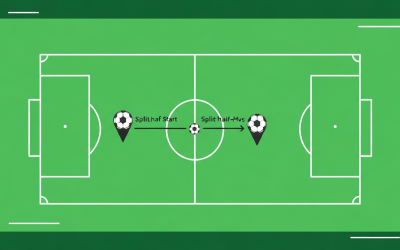
Asian handicap betting removes the draw and offers sharper odds. Learn how the handicap works, whole/half/quarter lines, and why it can beat standard markets.
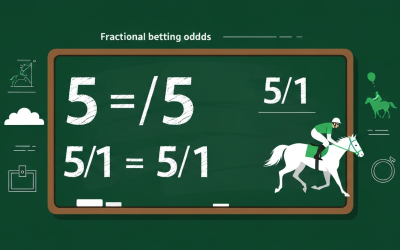
Fractional odds like 5/1 and 2/5 confuse many bettors. Here's how to read them, calculate returns, and convert them to probability.