What Is a Lay Bet on a Betting Exchange?
A lay bet is a wager that an outcome won't happen — letting you act as the bookmaker on a betting exchange. Here's how laying, liability and trading work.
Sports markets. Active offers appear first.
Choose a country to browse its offers.
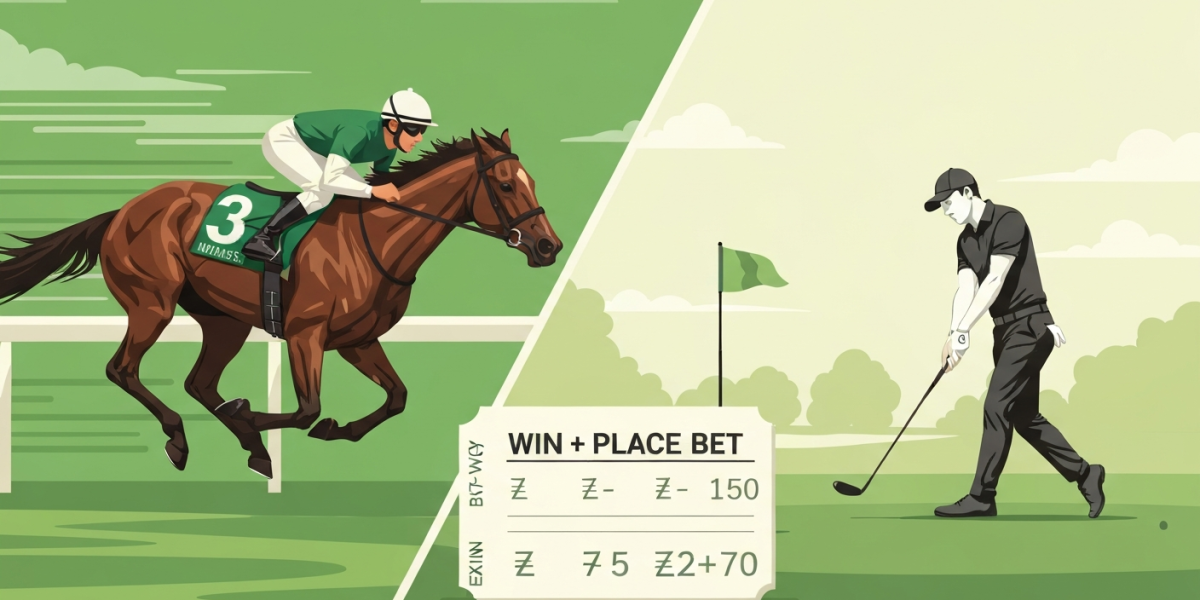
An each-way bet is two bets in one — a “win” bet and a “place” bet — so your total stake is doubled. You get a return if your selection wins outright or finishes in one of the paid place positions.
Each-way (E/W) betting is popular in big-field events like horse racing and golf, where picking the outright winner is hard. It combines two wagers:
The stake applies to each part, so a £10 each-way bet costs £20 total (£10 win + £10 place).
Place terms define how much the place part pays and how many positions qualify. They’re expressed as:
Terms depend on the event and field size. Typical horse-racing rules of thumb (bookmakers vary, and “extra places” offers exist):
Always check the terms shown next to the odds before betting.
A £10 each-way bet (£20 total) on a horse at 8/1, place terms 1/5 odds, first 4 places. Place odds = 1/5 of 8/1 = 8/5.
| Outcome | Win part (£10) | Place part (£10) | Total return |
|---|---|---|---|
| Wins (1st) | £80 profit + £10 = £90 | £16 profit + £10 = £26 | £116 |
| Places (2nd–4th) | £0 | £16 + £10 = £26 | £26 |
| 5th or worse | £0 | £0 | £0 |
Golf majors with 100+ players often pay 5–8 places at 1/4 or 1/5, making each-way popular. It’s also used in motor racing, athletics, snooker, and darts — anywhere a large field makes placing a realistic outcome.
Bookmakers often enhance selected events with extra places (e.g., paying 5 instead of 3) at the same odds — a genuine edge worth seeking out in competitive fields.
You can also place each-way accumulators: the win and place parts run as two separate accas, stake doubles, and every leg must win (or place) for that part to pay. Returns roll from leg to leg — high risk, high reward.
Yes. If your selection finishes first, both the win and place parts pay, producing a large combined return.
Dead-heat rules apply: the place stake is divided by the number of runners tied for the position, then paid at the place odds.
No — it’s offered when the field is big enough for placing to be meaningful. Small fields (under 5 runners in racing) are usually win-only.
1/4 pays a quarter of the win odds on the place part; 1/5 pays a fifth. 1/4 gives a better place return for the same win price.
Bottom line: Each-way betting balances risk and reward — best in large fields at longer odds, weak on short favourites. Always check the place terms first. 18+, please bet responsibly.

A lay bet is a wager that an outcome won't happen — letting you act as the bookmaker on a betting exchange. Here's how laying, liability and trading work.

A bet builder combines several outcomes from one match into a single high-odds bet. Learn how bet builders work, correlation, and how to build smarter.
Asian handicap betting removes the draw and offers sharper odds. Learn how the handicap works, whole/half/quarter lines, and why it can beat standard markets.